It’s almost the most wonderful time of the year, which means one thing for fundraisers: Giving Tuesday and Giving Season prep are well underway.
Nonprofits I support during this time always ask the same questions. When should you start planning your Giving Tuesday campaign? How do you set a realistic goal? And what do you prioritize when you have limited resources?
I decided that it was time to put the answers to all these questions into one ultimate playbook. In this article, I’ll outline everything you need to do before, during, and after Giving Tuesday to raise the most money and create lasting relationships with new donors
What is Giving Tuesday?
Every year, nonprofits launch Giving Tuesday campaigns to ask their audiences for support and raise awareness about their cause.
Giving Tuesday or #GivingTuesday is a global generosity movement that encourages charitable giving around the world. This day of giving was founded in 2012 by Henry Timms at the Belfer Center with the help of the United Nations Foundation and BLK SHP (Black Sheep).
Since then, it has grown into a global movement that funds vital work year after year.
Giving Tuesday falls on the Tuesday after Thanksgiving in the U.S. In 2026, Giving Tuesday falls on December 1. It serves as an important reminder to be charitable amidst shopping-centric holiday season events like Black Friday and Cyber Monday.
2025 Giving Tuesday Results
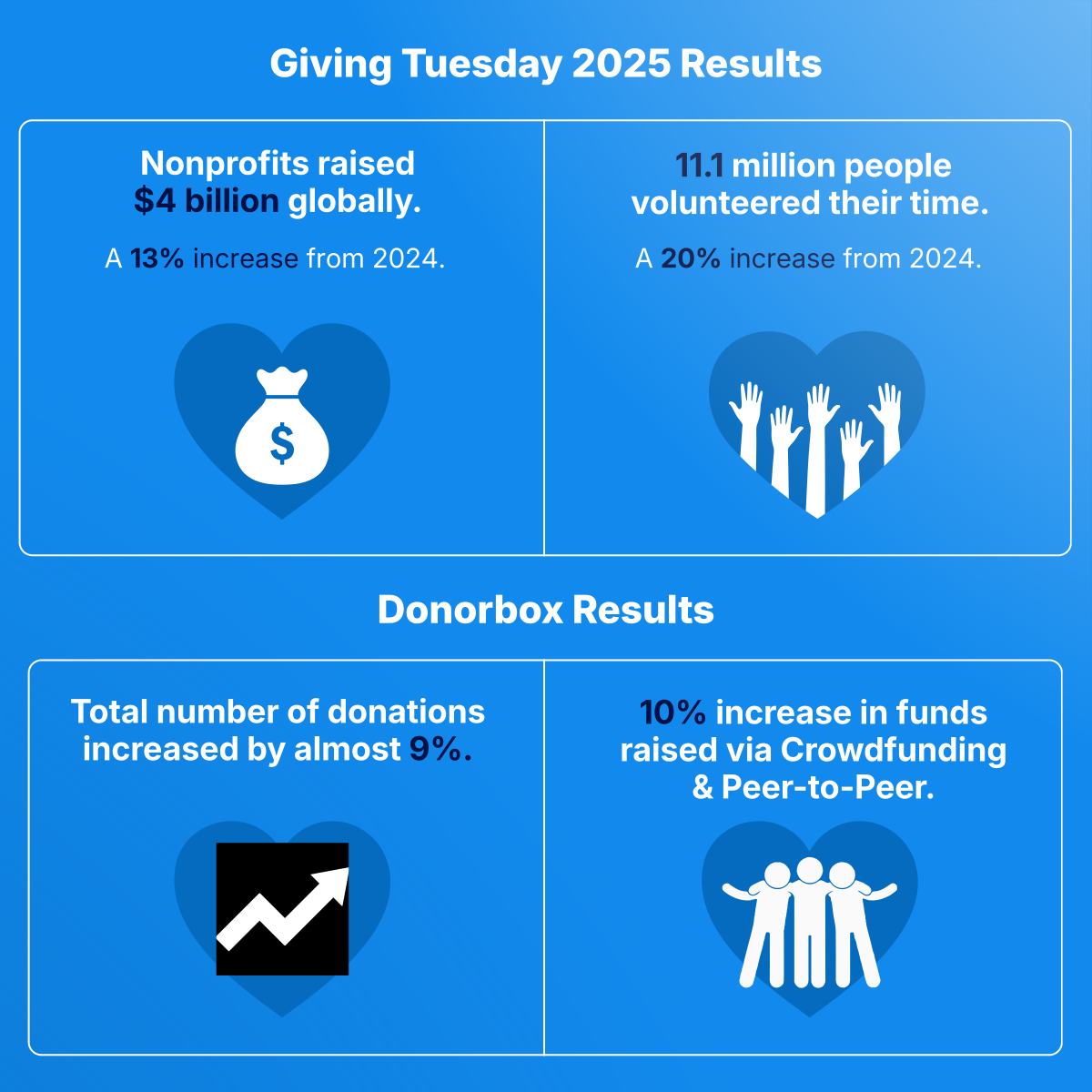
To show you just how powerful Giving Tuesday has become, last year nonprofits raised $4 billion globally, an increase of 13% from 2024.
For organizations using Donorbox, the total number of Giving Tuesday donations increased by almost 9%.
And it’s not just money people are giving. 11.1 million people volunteered their time (20% more than in 2024), and organizations using Donorbox raised 10% more with peer-to-peer fundraising year over year.
Generosity is ramping up, and people are looking for ways to get involved. Here’s how to capture some of this momentum.
Your At-a-Glance Giving Tuesday Timeline
Before I dive into the details, here’s a quick glance at a Giving Tuesday campaign planning timeline that focuses on strategic milestones.
- 12 weeks ahead: Set a campaign goal and budget.
- 10 weeks ahead: Finalize your tech stack.
- 9 weeks ahead: Finalize key campaign messaging and audiences.
- 8 weeks ahead: Pull all key impact stories.
- 7 weeks ahead: Set your campaign list parameters.
- 3 weeks ahead: Finalize campaign materials (emails, social posts, etc.).
- 1 week ahead: Pull campaign lists, if needed.
- Day of Giving Tuesday: Execute planned campaign actions and stay communicative to build momentum on the day.
- 1-2 days after: Send thank-you messages and post on social platforms.
- 1 week after: Survey new donors to learn more about them.
- 1 to 4 weeks after: Stay on top of ongoing stewardship.
This is generally what the weeks leading up to the big day look like, though the timeline and strategy will vary from nonprofit to nonprofit.
Here’s the breakdown of what these strategic tasks look like in action.
What To Do Before, During, and After Giving Tuesday: Your Playbook
Before Giving Tuesday
1. Set a goal
Set a Giving Tuesday goal that is both attainable and a realistic stretch.
To set a realistic Giving Tuesday fundraising goal, follow this simple methodology:
- Review your data from last year, including revenue, donor count, and average gift amount.
- Determine if you’ll stick to the same core campaign strategies as last year or add something new.
- Add in any confirmed matching donations or sponsorships.
For example, here’s what this goal-setting process might look like for a small arts organization.
- Last year, they:
- Raised $5,000 total, which included a $2,500 match from a corporate sponsor.
- Received donations from 120 donors who gave an average of $20 each.
- Ran a traditional email and direct mail campaign.
- This year, they plan to:
- Leverage peer-to-peer fundraising to get their top 20 supporters to fundraise on their behalf. They estimate each supporter will bring in at least 5 donors.
- Secure a match from the same sponsor, this time for $2,800.
Taking into account their success last year and the planned changes to their strategy this year, a realistic Giving Tuesday fundraising goal might be around $6,500.
2. Set a budget
Once you have a realistic goal in mind, you can work backwards to create a reasonable budget.
What does a Giving Tuesday campaign cost?
There’s no one answer to what a Giving Tuesday campaign might cost. Expenses will vary based on the channels and tools you use to fuel your campaign.
Some example expenses include:
- Paid promotion, like ads or media buys
- Creative production, like video storytelling
- Platform expenses for email/SMS tools
- Platform expenses for fundraising tools
So if everything has a different cost, how do you go about creating a budget? First, you need to create a strategy that matches the resources you have at hand.
Scale your strategy to your resources
Your campaign activities should fit your resources – not the other way around.
Unless you have major sponsorship dollars for your Giving Tuesday campaign, it’s important to make your strategy match your budget so you don’t overstretch your organization.
For example, here’s how you might prioritize your campaign spending depending on your organization’s size:
- Small nonprofits: If you have a well-established mailing list, prioritize spending on beautiful direct mail materials, like a nicely designed postcard with a QR code for quick mobile giving.
- Mid-sized nonprofits: Consider investing more in paid ads on social media to drive traffic to your donation page on the big day. This approach helps new donors get to know your work, too!
- Large nonprofits: In addition to the two options above, prioritize spending on consultants that can help you fine-tune your campaign materials to engage your audience even more this year.
Set your campaign goal, then use your available resources to guide your budget and ultimately your strategy.
3. Build your tech stack
These days, running a campaign requires a good set of tools at your disposal. Your Giving Tuesday tech stack should include these powerful, easy-to-use tools:
A fundraising platform
Giving Tuesday is all about online donations – especially crowdfunding. You need a fundraising platform that can handle a lot of traffic and provide a seamless giving experience for your Giving Tuesday donors.
Choose a platform that offers the following features:
- Reliable uptime so you never miss out on a donation.
- Easy and secure mobile giving.
- Multiple payment methods so donors can pay their way.
- Streamlined donor data collection for ongoing stewardship.
- Integrations with your other tools for seamless automation.
- Detailed, at-a-glance reporting.
- Automated, customizable donation receipts.
- World-class customer support.
For a full list of must-have features for your fundraising platform, review this article.
Organizations use Donorbox for Giving Tuesday fundraising because it offers all of the above features, plus simplified event ticketing, robust in-person giving options, and more.
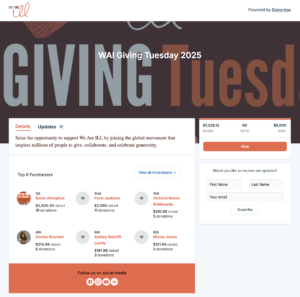
Check out We Are ILL‘s Donorbox-powered 2025 Giving Tuesday campaign. They exceeded their initial fundraising goal by 30%!
Build Your Giving Tuesday Campaign
A graphic design tool
One way to stand out from the crowd on this global day of giving is to create eye-catching graphics for social media, email communications, and your website.
Canva is a great, free graphic design tool you can use to create beautiful graphics for Giving Tuesday.
With pre-built templates and design guides, it’s easy for people at any skill level to create materials that look professional. Check out our guide to using Canva for a more in-depth look at this tool and its nonprofit features.
An email marketing platform
There are tons of options out there, so choosing the right email marketing platform can feel overwhelming.
Look for email platforms with pricing you can afford, robust tools, and easy-build email interfaces. Additionally, look for platforms that connect to existing tools in your tech stack. For example, Donorbox CRM offers Email Marketing, integrating seamlessly with your donor data.
A social media scheduling app
Save time and stress on the day of with an app that allows you to schedule your social media posts in advance.
Tools like Hootsuite and Later are reasonably priced and allow you to create one post that can be shared across multiple platforms.
4. Craft a compelling campaign
Your next step is to start crafting your campaign messaging and materials.
The way you frame your campaign can make or break your success, especially when it comes to donor trust.
Be transparent about how you’ll use campaign funds and showcase accurate impact figures and ethical storytelling.
Collect materials demonstrating impact
You’ll need plenty of compelling images of your mission in action. It’s best to begin searching for these as early as possible so you have plenty of time to secure permissions, edit the photos, and get feedback on which images are most captivating.
A picture is worth a thousand words – and when it comes to Giving Tuesday campaigns, the right picture might be worth a thousand dollars or more for your nonprofit organization.
Tell a story
Stories help us present the impact data of our nonprofit – the things we can’t demonstrate with numbers alone. Plus, they help us connect with our audience’s emotions, which is crucial for getting donations on Giving Tuesday!
Check out our guide to crafting the perfect fundraising story for your campaign. Also, learn more about how telling stories builds donor trust – and how that drives more donations.
Create captivating videos
Video, especially short-form video, is an increasingly popular way to share information and tell stories.
Because most smartphones these days are equipped with powerful cameras, it doesn’t take a professional to put together a captivating video. Your video can be as simple as having your executive director or other leader sit down and explain the value of your mission, or interviewing a beneficiary about the impact your organization has had on their life.
Learn more about how to create engaging year-end fundraising videos here.
Build your landing page
Your Giving Tuesday landing page is where your campaign will live – and it’s where people will “land” when they’re ready to give.
This can be an online donation page with your donation form embedded, or it can be a designated crowdfunding page.
Check out how Teen Driving Solution raised $74,578 through their Donorbox crowdfunding page last Giving Tuesday:

Get Your Campaign Live
5. Define and pull your lists
What you say on Giving Tuesday isn’t nearly as important as who you say it to. Your audience should inform your campaign, and vice versa.
Start by looking at the donors who gave to your Giving Tuesday campaign last year. What do they have in common?
For example, if a large percentage of those donors also supported a campaign you ran for a specific program, you might choose to focus on that program in your campaign materials to secure their donations again. Or you might find that a certain demographic is more likely to support you on Giving Tuesday, and you can align your messaging accordingly.
Whatever the case may be, diving into your donor data to define your lists helps you prepare both your campaign materials and the nitty-gritty of ensuring your campaign reaches the right inboxes, mailboxes, and social media accounts.
6. Build your social posts and emails
That tech stack you secured in the steps above? Now it’s time to put it to work.
Build your social posts in your scheduling app, and prepare your emails for sending through your email marketing platform of choice. Having these ready to go will remove stress on the big day and give you a chance to properly troubleshoot any issues that arise.
During Giving Tuesday
1. Stay active
You’ve scheduled your social media posts and emails already, but that doesn’t mean you can take the day off.
Keep an eye on social media and share live updates throughout the day as you near your goal. Recognize any major donations that have come in (with the donor’s permission, of course!) to drive further momentum.
Typically, you’ll want to send Giving Tuesday emails following this cadence:
- An email the day before to announce your campaign
- An email the morning of reminding donors to give
- A follow-up email later in the day with updates and another call to action
- A thank-you email the day after (more on that in the next section!)
Stay nimble and aware throughout the day to capitalize on any opportunities to drive your audience to your donation page.
2. Keep it brief and valuable
Your donors get bombarded on Giving Tuesday. Chances are you aren’t the only organization they support – so you won’t be the only one reaching out.
That’s why keeping your communications brief is so important. Share about your organization without taking up a lot of their time.
Your Giving Tuesday outreach has two goals: to raise money, obviously, but also to educate more people about your cause.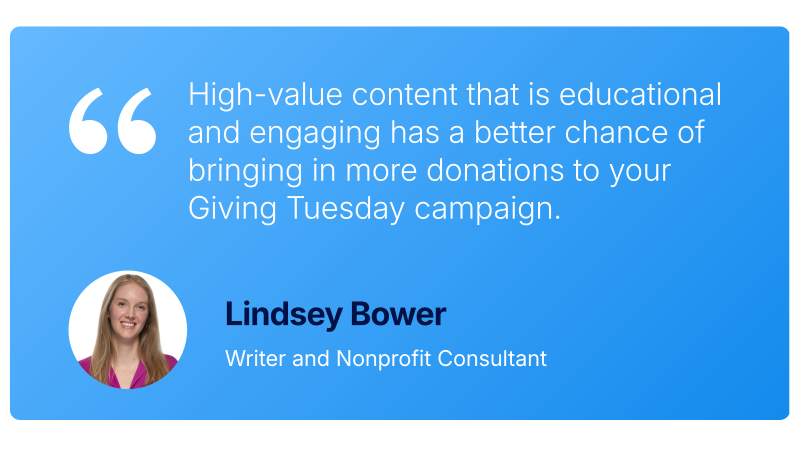
3. Get supporters involved
Ask your supporters to share your campaign with their friends and families. This will inspire more generosity and introduce more people to your nonprofit!
Pro tip: Enable peer-to-peer fundraising on your Donorbox campaign so your supporters can easily fundraise on your behalf. Learn more here
After Giving Tuesday
1. Acknowledge your donors
The day after Giving Tuesday, send a thank-you email to supporters and share your gratitude on social media. If you choose a fundraising platform like Donorbox, you can also customize donation receipts to add a message of gratitude.
Then, you’ll want to enroll new donors into a stewardship cycle with 30-, 60-, and 90-day milestones. For example, your stewardship plan might look like this:
- Within the first 30 days: send a survey to get to know your new donors, enroll them in your monthly newsletter, and ask them to upgrade their gift to a monthly donation.
- Within the first 60 days: demonstrate the impact of their Giving Tuesday donation by showing how you used the funds and invite them to your upcoming events.
- Within the first 90 days: ask them again to upgrade to a monthly donation or to make a one-time gift of a larger amount than their Giving Tuesday gift.
While the stewardship rhythm will look different for different organizations, typically the goal is to build on that first gift and encourage either a larger second gift or a smaller monthly gift.
2. Analyze your campaign
Once the dust settles, it’s time to analyze the effectiveness of your fundraising strategy and assess your campaign numbers.
There are many Key Performance Indicators (KPIs) for nonprofits, but here are the specific areas you should focus on:
- Fundraising: review dollars raised, number of donations received, number of donors (new and repeat), and cost per dollar raised.
- Engagement: review likes, shares, views, and comments on social media, as well as email engagement metrics such as open rate, click rate, and forward rate.
All of these metrics can be reviewed the day after to assess how well your Giving Tuesday campaign performed. Engagement metrics may continue to grow, which can show you how your messaging resonates even after the giving day has passed.
Perform a SWOT analysis
In addition to reviewing the data, you can perform a SWOT analysis to identify your campaign’s strengths, weaknesses, opportunities, and threats. This type of high-level analysis can help you adjust your strategy for next year.
We have a handy SWOT analysis template that you can download for free! You might also use our Rose, Bud, and Thorn worksheet to reflect on what worked and what you can improve.
3. Plan for next year
It’s never too early to start planning your Giving Tuesday campaign. Although you’ll want to wait until closer to next year to really dive into creating your campaign, now is the perfect time to rethink your strategy.
While your analysis is fresh in your mind, jot down some notes to yourself for next year. Is there something you’d like to try? Something that didn’t work this year? Did you go over or under budget?
When next year comes around, you’ll be armed with a wealth of knowledge. This process can help you prepare for the rest of Giving Season, too.
Over to You
With plenty of lead time and the right plan in place, your Giving Tuesday 2026 campaign can run smoothly and bring in more donations for your mission. We’ve outlined the steps you need to take before, during, and after this global day of giving. But the most important step is ensuring your tools are up to the task.
Donorbox helps thousands of organizations boost their fundraising all year long, especially on Giving Tuesday. Learn more about our features and sign up today.
FAQs
1. How can my nonprofit organization participate in Giving Tuesday?
All your nonprofit or community organization has to do to participate in Giving Tuesday is simply create a campaign and share it with your supporters. You can use the hashtag #GivingTuesday to make your campaign more visible and connect with other organizations holding Giving Tuesday campaigns.
2. What are some effective fundraising ideas for Giving Tuesday?
Crowdfunding is a common Giving Tuesday fundraising tactic because it harnesses the power of the crowd to meet your fundraising goals. It’s also great for social media campaigns, since it’s easy for your supporters to share them with their friends. Donorbox Crowdfunding is simple to set up, with tons of donation-boosting features.
Creating engaging fundraising videos is another popular Giving Tuesday fundraising idea. For more inspiration, check out these 10 creative Giving Tuesday ideas.
3. Are there any specific platforms or tools recommended for online fundraising on Giving Tuesday?
Donorbox is a highly recommended Giving Tuesday donation platform. Thousands of organizations around the world trust Donorbox to help them make the most of their Giving Tuesday campaigns.
Other necessary tools include:
- A graphic design platform like Canva
- An email marketing platform like Mailchimp or ActiveCampaign
- A social media scheduling app like Hootsuite or Later
These tools combined will help you run a successful Giving Tuesday campaign.


 Join the fundraising movement!