Legacy giving, also known as planned giving, is one of the most powerful yet underutilized tools in the Jewish nonprofit fundraiser’s toolkit.
Often, organizations delay conversations with their donors because it feels too complicated, too uncomfortable, or just “not the right time.”
But with an estimated $75–$124 trillion transferring between generations, the Great Wealth Transfer is the impetus your nonprofit needs to build a legacy giving program right now.
What Is a Legacy Giving Program?
A legacy giving program is a structured, organization-wide effort to identify, cultivate, solicit, document, and steward donors who make planned gifts to your mission.
These planned gifts are made during a donor’s lifetime or after their passing. It is often the donor’s largest and most meaningful gift, and most commonly made through bequests or a beneficiary designation on retirement accounts, or another asset.
A legacy giving program is intentional, built on relationships and about communicating the long-term vision of your nonprofit. It’s about stewarding donors who make a commitment, often decades before the gifts are realized.
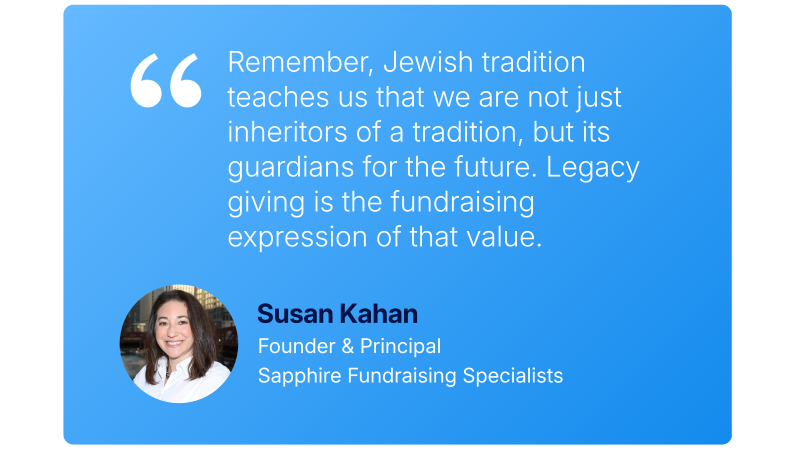
For Jewish nonprofits, this carries particular resonance. Our communities are built on the idea of continuity, where traditions and values are passed on from one generation to the next, L’dor V’dor.
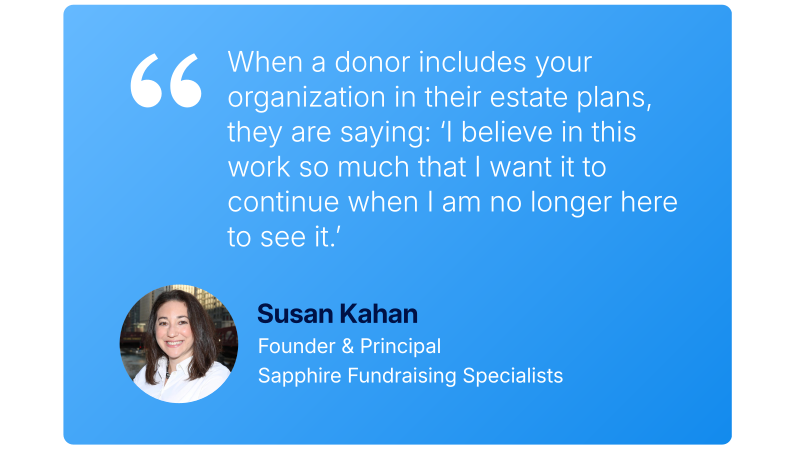
It’s an honor to receive a legacy gift, and it’s rewarding for donors to know they will be remembered for their generosity.
How to Build Your Jewish Legacy Giving Program in 8 Steps
Here’s how to build a legacy giving program that fits your organization, no matter where you’re starting from.
Step 1: Build your case
It always has to start with the why. Why does your nonprofit’s work matter? Why is it important to carry that on for future generations? And why can a donor’s gift make a difference?
Once you can answer those questions, you’ll have the start to your case for support.
The messaging should be similar to your general fundraising messages, but instead of seeking support for today’s challenges, it is entirely future-focused.
Step 2: Get internal buy-in before you launch
Before promoting anything externally, look inwards first. That means getting leadership – both your staff and your board of directors – to genuinely align on roles and processes. Moreover, everyone has to be committed to investing in legacy giving work, while knowing that the returns will likely not be seen for decades.
Some considerations to bring to your team include:
- Who is responsible for initiating legacy conversations
- Any documentation requirements
- What stewardship opportunities you’ll offer once commitments are made
- What your gift acceptance policy outlines
Finally, encouraging your entire board to make their own legacy commitments will inspire others to do the same. Donors take cues from their peers, and board buy-in signals that their future financial commitments will be managed well and used with purpose.
Step 3: Market and educate
The biggest difference between planned gifts and annual or major gifts is that often the donor needs to do something beyond just giving the gift.
Changing a beneficiary designation or updating their will is not something most people do frequently. So your nonprofit has to market frequently and in multiple ways to encourage your donors to leave your organization in their estate plans.
Part of that marketing is educating about legacy giving and the different ways to give. These types of materials could be on a standalone legacy giving page on your website, in printed newsletters, or even within a webinar on estate planning.
Some ideas:
- Talk about how donors over 70½ can make Qualified Charitable Distributions each year
- Ask if donors already have a donor-advised fund
- Share sample bequest language
At a minimum, your organization should have your legal name and Tax ID readily available for a donor to grab when they need it, as well as a way to contact your staff directly when they have questions or want to share about the commitment they have made.
Step 4: Identify your top prospects
Did you know that most legacy donors are those who are long-term supporters, not necessarily your largest donors?
Long-term donors who give consistently, attend your events, and stay engaged year after year are your strongest prospects. Target this group for your marketing and cultivation efforts.
When reviewing your donor database, ask:
- Who has been with us the longest?
- Who gives every year, even in difficult ones?
Those are your people. Start there.
Step 5: Start the conversation with the right message
This is the step many fundraisers fear most, yet the most important one. Donors need to know you’re looking for legacy gifts. Tell them.
Start by talking about what is meaningful to your donors. Make this conversation a natural extension of the relationship building you already do.
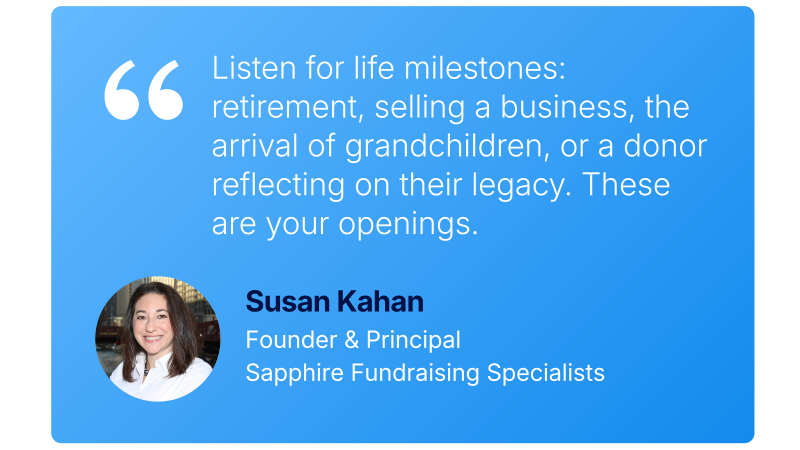
Then, in a private setting, directly ask:
As you think about the future and how you want to be remembered, have you ever thought about including [organization name] in your estate plans?”
Or:
You’ve been such an important part of what we’ve built together. Would you consider being part of shaping what this community looks like in the future?”
Then, stop talking. Let them sit with it. The silence is respectful, not awkward.
What doesn’t work? Leading with tax benefits, getting into legal details too early, or centering the conversation on your organization’s needs rather than the donor’s values and timing.
Step 6: Recognize and steward legacy donors
Stewardship doesn’t begin when a legacy gift is realized (which is often after the donor passes). It must begin as soon as you are alerted the commitment has been made.
That moment is one of the most meaningful things a supporter will ever share with you. Respond with a personal, heartfelt acknowledgment, not a bland form letter. From there, consider how you’ll keep these donors connected and celebrated over time, so they don’t consider changing their revocable gifts.
Step 7: Use the right tools to support long-term donor relationships
Sustaining a legacy giving program over time requires systems that help you track relationships, document commitments, and stay connected with donors across years or even decades.
This kind of long-term stewardship is impossible without the right tools, considering that the staff who solicited these gifts are often not around once they’re realized.
This is why a strong CRM is essential.
Tools like Donorbox CRM empower Jewish organizations to build exactly this kind of visibility and donor connection. With features designed to help nonprofits build community, manage communications, and document legacy commitments, Donorbox makes it significantly easier to run a thriving program — even for smaller organizations without a large development team.
Learn More About Donorbox CRM
Step 8: Start small and build over time
You do not need to launch a polished program with a named society, dedicated staff, and a campaign page on day one.
Start with your messaging and start telling your donors about it. Now.
Once you receive commitments, document everything to help your future colleagues. Until those gifts are received, stay in touch with your most committed donors, so they stay that way.
Over to You
For Jewish nonprofits, legacy giving goes beyond fundraising strategy. It’s an expression of who we are: a community that has always looked forward, built for the next generation, and found meaning in ensuring our traditions outlast us.
Your donors feel this. They already care deeply enough to give during their lifetimes. With the right conversations, the right structure, and genuine stewardship, many of them will also want to give beyond their lifetimes.
Ready to move from reactive fundraising to a more confident, future-ready approach? Contact Sapphire Fundraising Specialists to get the support you need.


 Join the fundraising movement!