A recent report revealed that 42% of churches lack efficient digital tools to measure and amplify engagement.
Without clear, actionable insights, your church may be missing out on opportunities to increase engagement and attendance. By analyzing church metrics, you can identify improvement areas across your fundraising, stewardship, and ministry programs.
Below, I’ll explain how you can use church metrics to transform your ministry and cultivate a renewed sense of growth and generosity.
What Are Church Metrics?
Church metrics are key performance indicators for the health and growth of your ministry. These data points allow you to analyze and track giving trends, measure attendance and engagement, and improve stewardship efforts.
Using church health metrics and engagement reports helps you understand what you are doing right and where you can improve. This provides you with new insights for nurturing your congregation and making informed decisions that grow your church.
3 Church Metrics That Matter Most
1. Church giving and donor metrics
Tracking giving metrics – such as tithes and other offerings – provides greater insight into how well your church is performing financially.
Donor metrics give you a better understanding of whether you need to increase your stewardship efforts to inspire a renewed sense of generosity.
Plus, knowing how many members regularly support your church is a fantastic way to gauge how invested people are in your ministry, and where new donor engagement opportunities lie.
Top tip: Use a church metrics dashboard to view and analyze this information in a clear and digestible way while identifying trends that inform your future decisions and outreach efforts.
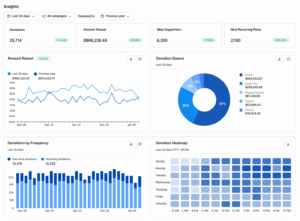
For example, Donorbox’s Dashboard provides a snapshot of some of your church’s most critical performance metrics for better member engagement and strategic decision-making.
Track Church Growth and Metrics with Donorbox
Here are some dashboard features you can leverage for your ministry:
- Donations: Quickly view how many donations your church has received to date.
- Amount Raised: See how much you’ve raised through all your church fundraising campaigns during a specified time period, with a graph for easy visualization and budget planning.
- Donations by Frequency: View and compare the total number of active one-time and recurring donation plans to track online tithing and other gifts to your church.
- Donation Source: See how church members are donating and review giving preferences, such as digital wallets among younger members or more cash donations on specific days, like Sundays.
- New Supporters: Assess how many new members supported your church for the first time.
- Donation Heatmap: Analyze the volume of donations to your ministry at specific times of day to see when people are more likely to give to your church.
Plus, filter data by time period and campaign, download it into digestible chart formats for team discussions and analysis, hover over charts to use tooltips for further data exploration, and more.
With all this data at your disposal, you can better engage your donors, measure campaign performance, and track fundraising trends.
Learn how to leverage the full power of the Donorbox Dashboard here.
2. Ministry engagement metrics
From how many people attended a sermon to small group involvement and volunteer participation, engagement is one of the most important church metrics you should track for success.
If the level of engagement in your church is low, people may not feel connected and may require deeper stewardship and outreach.
Here are some important engagement metrics to keep track of:
Attendance
From church attendance to how many people attend your events and programs, tracking attendance gives you an idea of the size of your congregation, how many people engage with your church, and when attendance tends to peak or drop throughout the year.

Pro tip: Remember to consider popular holiday seasons, the size of your city or town, and similar factors when analyzing church attendance.
New members
Tracking first-time members helps you evaluate how many people are discovering your church – and the success of your outreach efforts.
For example, measure whether your church is reaching new people by analyzing how many new attendees visited in the last quarter. Plus, analyze how new members are engaging with ministry programs to evaluate whether you’re stewarding them effectively.
This metric also provides demographic-specific information – use it to personalize your outreach and recognize new opportunities to update existing programs.
Digital engagement
How many people visit your ministry’s website? What are the open and click rates of your monthly newsletter? These are just two examples of digital engagement metrics.
With a rise in hybrid churches and younger generations preferring a digital approach to access God’s word, tracking both digital and in-person engagement is more important than ever.
3. Outreach metrics
Tracking outreach metrics helps determine how successful your ministry is at connecting more people to Jesus. Here are some outreach metrics to consider tracking:
- Baptisms: These events are a strong indicator of how many people you’ve reached.
- Discipleship: Track the level of engagement across church programs – such as Bible study classes and youth groups – to see how invested your members are in growing spiritually. Low participation could mean you need to reassess how effective your current initiatives are, or indicate that your communication needs some work.
- Outreach and missions: Analyze your ministry’s impact by reviewing attendance and engagement at community outreach programs, as well as local and international mission trips.

How to Use Church Metrics to Grow Your Ministry
1. Identify areas for improvement
Start analyzing the metrics listed above on a monthly or quarterly basis to pinpoint specific trends. Then, use the data to earmark one or two areas that indicate room for growth.
For instance, if you notice a drop in tithes and offerings, analyze the giving behavior of new donors, lapsed donors, and recurring supporters to identify any potential areas experiencing decreased engagement.
Segmenting the data also allows you to personalize your outreach. For example, re-engage lapsed donors with impact reports and beneficiary stories, or send an email encouraging one-time donors to become recurring supporters.
You may also decide to educate your church on the importance of giving faithfully during sermons or monthly newsletters.
2. Set SMART goals
Now that you’ve selected a key area or two you’d like to focus on, use the SMART method to help you set a realistic and achievable goal.
For example, instead of simply aiming to “increase tithes,” set a goal like: “Increase recurring supporters by 20% over the next six months.” This makes your goal more achievable and measurable.
Setting a deadline holds you and your team motivated and accountable. This also helps effectively measure and increase your efforts, and informs your decision-making in the future.
Next, select church metrics that align with your specific goal. Building on the example above: if you’re trying to grow recurring giving, focus on the numbers that matter most – active recurring plans and average gift size. Review these over time to see whether your efforts are working.
Bonus resource: Use our free SMART Goal Setting Worksheet to help you get started.

3. Create a church metric report
Compile key data to create a digestible report and share it with your staff and church leaders so everyone is aligned.
Review your report regularly with staff and stakeholders. Use the data to facilitate meaningful conversations and make strategic decisions about your ministry’s finances, program planning, and the potential reallocation of resources to areas with higher engagement.
Remember to revisit these metrics on a monthly or quarterly basis to assess whether your efforts are leading to the desired results, and adjust your strategy accordingly.
Grow Your Church with Donorbox MinistryMomentum
Tracking church metrics is one of the most powerful ways to accelerate the growth of your ministry and reach even more people through God’s word.
With Donorbox’s Campaign Metrics Dashboard, you can access powerful insights into donor and donation data, helping you strengthen donor communication and elevate your fundraising efforts.
Donorbox MinistryMomentum is a dedicated pillar of Donorbox, providing smart giving features that align with the unique needs of your ministry. Sign up today to build a stronger culture of generosity and deepen connections with church members.
For more insightful church fundraising ideas and tips, visit our Nonprofit Blog. Subscribe to our monthly newsletter to receive an exclusive collection of articles and resources sent to your inbox.
Frequently Asked Questions
1. Which church metrics should I track for success?
Some important church growth metrics include giving and fundraising campaigns, church attendance, engagement, and outreach.
2. When should I review church growth metrics?
Review and analyze church metric reports on a monthly and quarterly basis to stay on top of key trends in giving and other key performance indicators. Fundraising platforms like Donorbox streamline the process of tracking and analyzing donor insights and fundraising data.


 Join the fundraising movement!