While star-studded galas and massive nonprofit fundraising events are effective, they can also be a double-edged sword.
Why? The larger the event, the larger the risk of impersonality – which often leads to short-term interest with a high risk of engagement drop-off.
Today’s most effective nonprofits are moving away from hosting flashy, high-budget events and focusing instead on curating smaller, more intentional gatherings.
In this blog, I’ll walk you through how smaller events help build trust, community, and ultimately a relationship that turns short-term interest into long-term relationships.
Why Smaller Events Often Have Bigger Results
Many nonprofit leaders make the mistake of producing high-end, expensive events with the express purpose of luring prospective donors to their cause. However, this can ultimately end up feeling transactional and impersonal.
In her Paperless Pro webinar on using events to build lasting connections, nonprofit digital engagement strategist Julia Campbell invites leaders to remove the transactional nature of nonprofit fundraising and recontextualize it as building a relationship ecosystem.
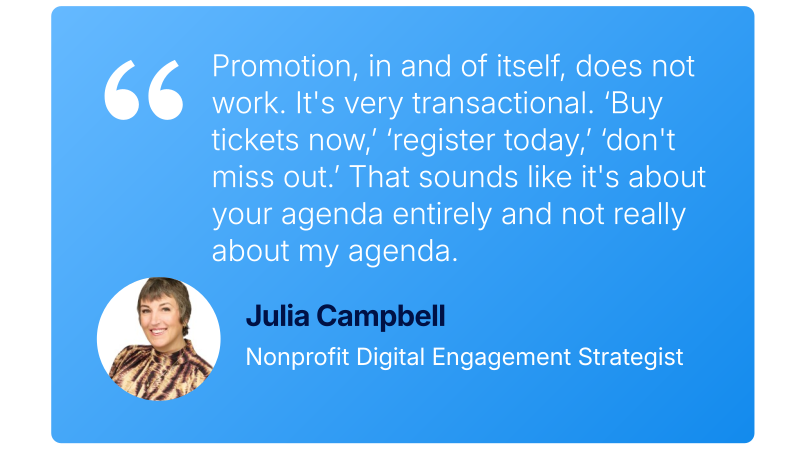
Ultimately, patrons who feel like they’re just another face in a sea of prospective donors will be less likely to give because they just aren’t feeling connected.
The fix is simple: fewer transactions, more community.
Organizations seeing the deepest loyalty are scaling down, trading one 300-person ballroom for six 20-person dinners designed to build a community of devoted and engaged donors.
Replacing impersonal events with people-driven social functions goes beyond just asking for money; it builds community. This is what digital leadership and marketing consultant Dr. Josie Ahlquist called a “return on relationship” in a recent webinar, identifying it as the most important ROI that an organization can seek.
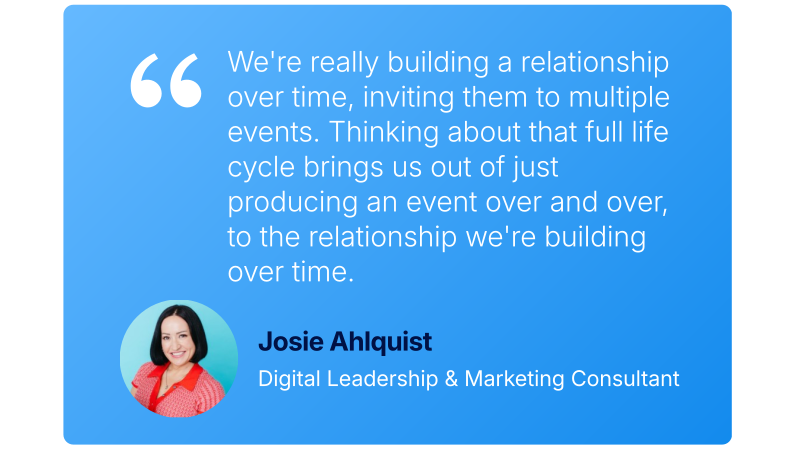
In a world of shrinking budgets and donor fatigue, small events feel more personal, cost less, and quietly do the heavy lifting of major-donor cultivation.
Intimate is more impactful
Smaller gatherings also allow for deeper conversations and less planning stress.
In addition, despite having fixed costs, smaller events have higher perceived value. An invitation-only dinner for 25 feels more special and intimate than getting lost in a sea of 300 other faces.
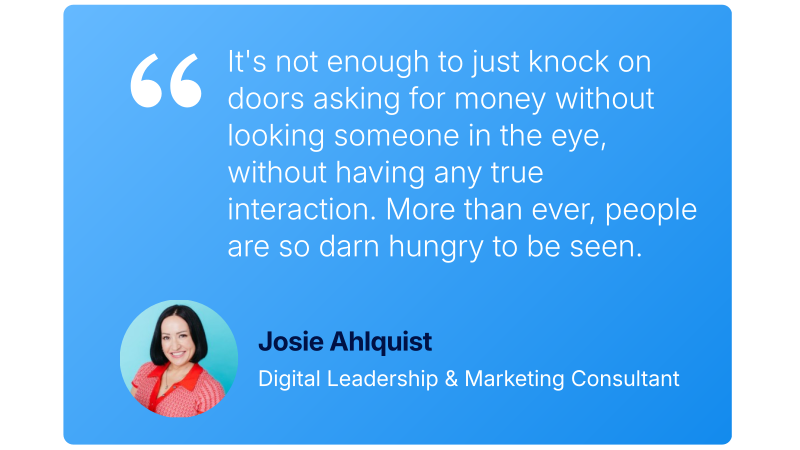
Donors are seeking intentionality, and this can be done more effectively with smaller events with a clear purpose.
Start with Purpose and the Right Audience
Organizations that jump right into producing huge events might find themselves with short-term success, but a long-term decline in engagement. This is because they skipped the most important step of creating long-term community relationships: the “why.”
Be intentional about who the event is for, and why they should care. Take a (literal) page out of “The Art of Gathering” by Priya Parker and focus on what you want the experience to be, rather than just posting a QR code and hoping for the best.
Some tips on how to do so:
- Instead of asking what your organization can take from your attendees, ask yourself what memory you’d like them to take away from your event.
- Think about what kind of events create a feeling of purpose: functions that provide the opportunity to connect with the person next to you, without the expectation of “networking.”
- Focus on reaching out to a personalized cohort (i.e., those with a shared interest or a specific giving tier) and curating a special experience just for them. This will make sure that guests are engaged, not only in the institution, but also in each other.
Set the Tone Before Guests Arrive
For better or worse, first impressions can be a make-or-break moment. Collecting donations and contact information at the end of a successful event is rewarding, but intimacy can be built before donors even walk through the door.
- Leverage engaging and informative invitations that set the stage for what kind of event people can expect.
- Customize the invitation to match your theme.
- Add your organization’s branding elements.
With just a little extra thought and care, you’ll see how enthusiastically people respond to your outreach. All it takes is a personal touch.
Start with the language surrounding the event and your mission. Focus less on your organization’s agenda and more on why people connect with it in the first place.
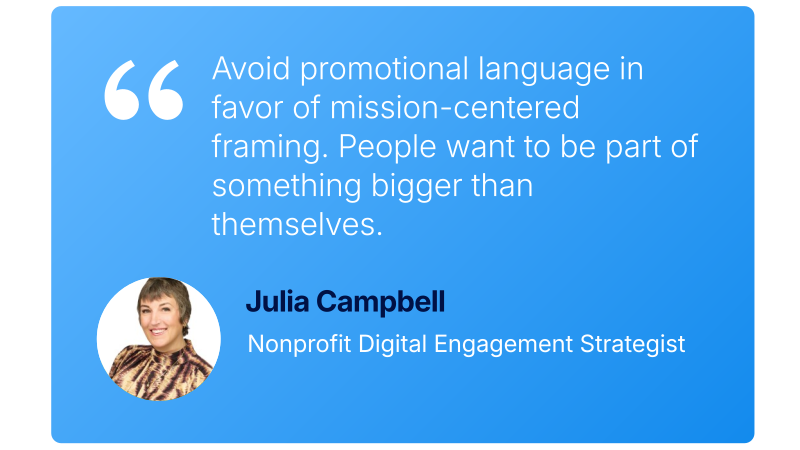
For example, “Buy a ticket today” instigates a different emotion than “Help create scholarships for first-generation college students.” This small but important step is when people stop being prospective donors and start thinking like active members of a community, which makes them want to stay engaged in the future.
Julia puts it simply: “People return when they feel seen.”
Design the Event Around Connection
When every part of an event is built around hitting a fundraising target, guests may struggle to form a genuine connection with your mission.
The key to creating strong community-driven events is to focus on the social aspect so intently that people will almost forget that there might be a financial ask on the horizon.
If you curate an event that is memorable and instills a sense of belonging, people will want to interact and potentially even invite others to share in the community that has made them feel so special.
Build Belonging Between Events
So, you’ve nailed the language of the invitation and hosted your first of many small events tailored to your carefully curated audience, but the work isn’t over. Within the first 48 hours after the event, you need to send a personalized thank-you message.
In those follow-ups, be sure to include details that extend the event beyond the closing doors:
- Event photos
- An impact update
- Downloadable resources
- Most importantly, a sincere thank you
Don’t use this time to ask for money. Instead, focus on nurturing the community you’ve begun to build by inviting them to a group chat, online forum, or another avenue to keep guests connected. This is how you turn attendees into ambassadors who spread the word about your organization and its mission.
These methods remain important even as you scale up the size of your organization. For example, the Norton Museum sends 10,000+ invitations every year, but every guest still receives a personal follow-up from the director after the event.
A personal touch reminds people that they’re a valued member of the community, not just a number with a dollar sign.
Final Thoughts
The best gift that donors can provide is not their money, clicks, or contact information. It’s a relationship.
That’s why smaller events are so important. They give people the opportunity to interact, find commonalities, build relationships, and think about what kind of impact they want to leave on their community as a whole.
The right tools can help you carry that same thoughtful approach through every stage of your event.
A tool like Paperless Pro simplifies invitations and guest communication, giving your team more time to focus on the experience itself. Plus, nonprofits can also currently receive 25% off a subscription!
And when guests are ready to support your mission, Donorbox gives them a frictionless way to make one-time and recurring gifts at your event and beyond – plus turn the connections you made into long-term relationships.

 Join the fundraising movement!