67% of nonprofits worldwide fundraise online. With digital giving on the rise, the California Assembly Bill (AB) 488 was introduced to bring more clarity and oversight to the process. It sets out rules for how fundraising platforms and nonprofits collect, manage, and report donations from California residents.
If you’re uncertain about the law’s requirements and how it may impact your nonprofit, I’m here to help. I’ll also explain how to remain in good standing with the California Attorney General’s office.
What Is California AB-488?
The California Assembly Bill (AB) 488 is a law that affects any nonprofit soliciting and receiving donations from California residents. To stay compliant, nonprofits must be in good standing and maintain their 501(c)(3) status with the California Attorney General, Franchise Tax Board, and IRS.
Sometimes called the Charitable Solicitation Registration Act, it also requires online fundraising platforms like Donorbox to ensure that nonprofits receiving charitable contributions from Californian donors are in good standing with the above-mentioned entities before enabling them to fundraise.
CA AB-488 was initially signed on January 1, 2023, and the final regulations were approved on March 24, 2024. This law aims to ensure that contributions from Californian donors are used and distributed ethically, based on their intended purpose.
If your nonprofit is flagged as delinquent by the California Attorney General’s office, you won’t be permitted to accept donations from California residents until you rectify your status. Subsequently, your fundraising platform can’t facilitate any donations received until you are properly registered.
Does California AB-488 apply to your nonprofit?
If you run a California-based nonprofit – or solicit and receive donations from Californian donors – then you must comply with the California (AB) 488 requirements.

CA AB-488 Requirements
As I’ve already mentioned, if you solicit and accept charitable donations from California donors, your nonprofit is considered to be fundraising under California state law – and must remain in good standing – no matter where you’re based.
You must therefore ensure that:
- Your organization’s federal tax-exempt status has not been revoked by the IRS.
- Your California tax-exempt status has not been revoked by the California Franchise Tax Board (FTB).
- You are not prohibited from soliciting and receiving donations in California by the California Attorney General.
How to remain in good standing
1. Meet the requirements of the California Attorney General’s office
Firstly, you must meet all the requirements of the California Attorney General’s office to maintain your 501(c)(3) and good standing status – and avoid being considered delinquent.
Regularly check your organization’s standing and review any potential missing requirements on the California Attorney General’s Registry of Charities and Fundraisers.
2. File state and federal forms on time
Submit the forms required by the California Attorney General’s office, California Franchise Tax Board, and the IRS on time to maintain your tax-exempt and good standing status.
Consult with your legal advisor to determine which forms apply to your organization, but here’s a list of some the forms you may need to file with each entity:
California Attorney General’s Registry of Charities and Fundraisers:
- Form CT-1 (for initial registration)
- Form RRF-1 (required to be filed annually by all charities).
- Form CT-TR-1 (may be required/allowed annually for qualifying smaller organizations).
California Franchise Tax Board:
- Form 199N (for gross revenue of $50,000 or less)
- Form 199 (for gross revenue greater than $50,000)
IRS:
- Form 990-N (for gross revenue of $50,000 or less)
- Form 990-EZ (for gross revenue of $50,000 – $200,000)
- Form 990 (for gross revenue exceeding $200,000)
Note: If your nonprofit is registered with physical operations located in California, you must also file with the Secretary of State every two years. Seek legal advice on whether this applies to your organization and visit this link for more information.
3. Monitor your good standing status regularly
To remain compliant, your nonprofit must avoid being included on the following lists:
Periodically check your status on these databases and stay up to date with the necessary requirements to remain in good standing.

4. Partner with a compliant online fundraising platform
Under CA AB-488, online fundraising platforms are also required to register and remain compliant.
Partnering with a platform that does not meet the law’s requirements can put your organization at risk and delay your ability to access funds.
Donorbox understands the importance of complying with regulations and is registered with the California Attorney General’s office.
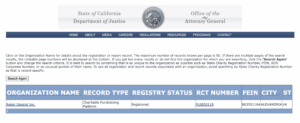
To check whether your fundraising platform has a “Registered” status, conduct a search on the Registry of Charities and Fundraisers. You can see Donorbox’s active registration under Rebel Idealist, Inc.
What to do if your nonprofit is considered delinquent
If your nonprofit is considered delinquent, rectify your status with the California Attorney General’s office to resume soliciting and accepting contributions from Californian donors.
This typically involves submitting outstanding forms and paying any associated fees to regain your tax-exempt and good standing status.
Contact the Attorney General’s Delinquency Program for updated information regarding your status and the steps involved to return to compliance.
Over to You
If your nonprofit raises money online, it’s worth knowing how AB-488 could affect you. Staying properly registered means you won’t hit any roadblocks when accepting mission-critical donations from California.
At Donorbox, we stay on top of laws like AB-488 – so our tools can support your compliance efforts. From donation forms to reporting features (and more), we’re here to help you stay organized and fundraising-ready.
If you haven’t already, sign up today. For more nonprofit fundraising articles and insights, visit the Nonprofit Blog.
Disclaimer: This guide is for general informational purposes only and does not constitute legal or tax advice. Please consult with your legal and/or tax advisor to verify any information provided.

Jamy-Lee Holt
Jamy-Lee has over 7 years of experience in copywriting and content marketing. With experience teaching in underserved communities and volunteering for animal rescue organizations, she has a first-hand understanding of the challenges faced by mission-driven organizations. She now uses her passion for writing to share practical insights that help nonprofits fulfill their missions.
 Join the fundraising movement!