How to Make the Most of the Slow Season: 5 Fundraising Experts Weigh in
The slow season doesn’t have to be wasted or overfilled. Here’s what 5 fundraising experts recommend focusing on from June through August.
Published on

The slow season doesn’t have to be wasted or overfilled. Here’s what 5 fundraising experts recommend focusing on from June through August.
 Join the fundraising movement! Join the fundraising movement!
The slow season can feel strange for fundraisers.
After months of campaigns, events, appeals, and urgent deadlines, the quieter stretch of June through August often brings a different question: what should you focus on now?
So, I asked five fundraising and nonprofit experts how they’d approach the quieter months.
The experts:
Here’s what they had to say:
The first thing to know about the slow season? Not everyone likes calling it that.
Elizabeth suggests simply thinking of it as “the summer” instead. It’s a small shift, but a useful one. Staff are taking leave. Donors are vacationing. People are outdoors.
They still care about your mission, but they are in a different rhythm.
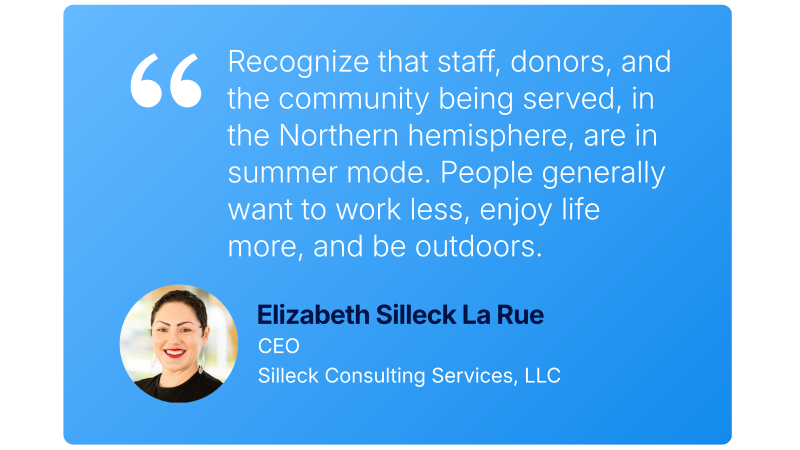
All that considered, a quieter inbox or slower campaign clicks shouldn’t send you into panic mode. Summer has its own energy, and trying to force it to feel like Giving Tuesday or year-end can make your outreach fall flat.
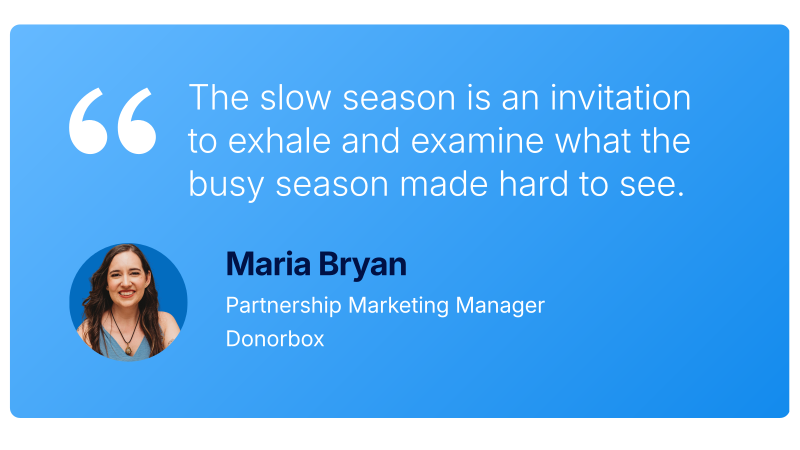
Maria has a helpful take, here. She sees these quieter months as a chance to notice what’s fallen through the cracks.
 Darrin takes a more direct stance: the slow season is not “downtime,” but “build time.” And that’s a useful pushback against the idea that summer has to be written off completely.
Still, build time doesn’t necessarily mean hustle time. The real opportunity is to treat these months as a quieter window to ask better questions, make thoughtful choices, and approach the upcoming giving season with care.
The experts had slightly different views on cadence when it comes to comms. Kelly McLaughlin recommends staying consistent. Elizabeth suggests paring things down because people are less available.
The bigger point is less about how often you communicate and more about what your communication is doing.
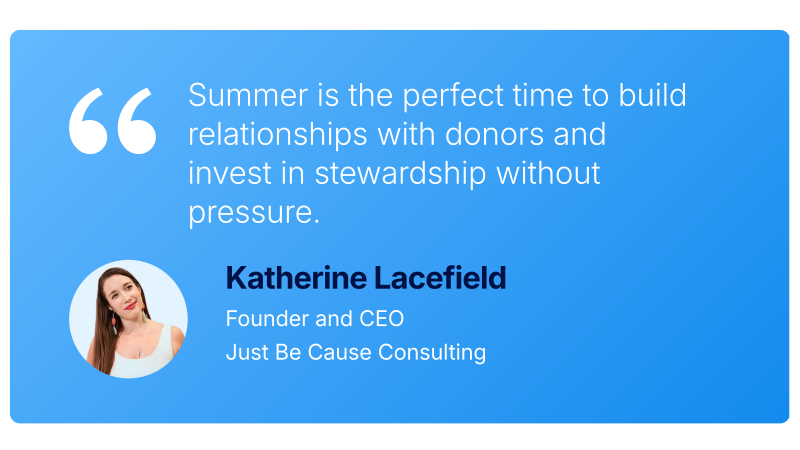 That “without pressure” part is key! Summer isn’t always the best time for a hard ask or campaign-style push. But it can be a great time to keep the relationship warm.
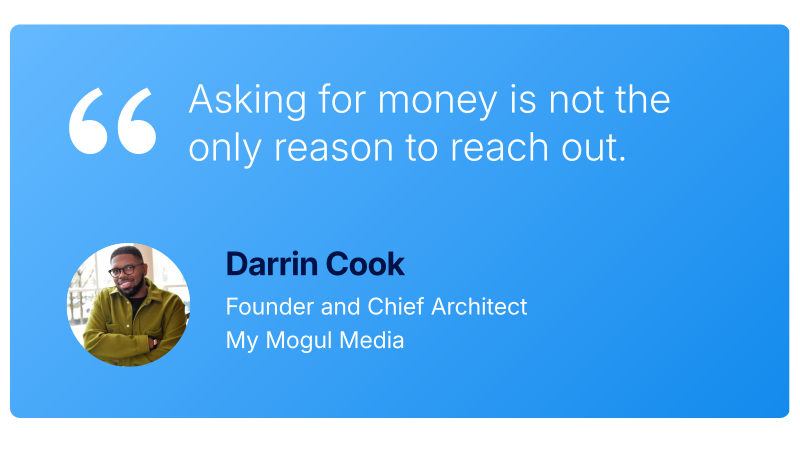
That’s why, as Darrin put it, summer communication should feel more relational than transactional.
 Katherine also recommends sharing inspiring impact stories during this period. A short, warm update keeps donors connected without making every touchpoint feel like a request.
Plus, according to Kelly, some donors are actually easier to reach during the summer – especially for one-on-one conversations. She adds that if there are any major donors you’ve been meaning to connect with, it’s worth trying to set up a meeting.
And if some people don’t respond? Make a note and come back to them in the fall.
Some of the best advice the experts gave was about knowing when to ease off, especially regarding tone in your outreach.
Elizabeth puts it simply:
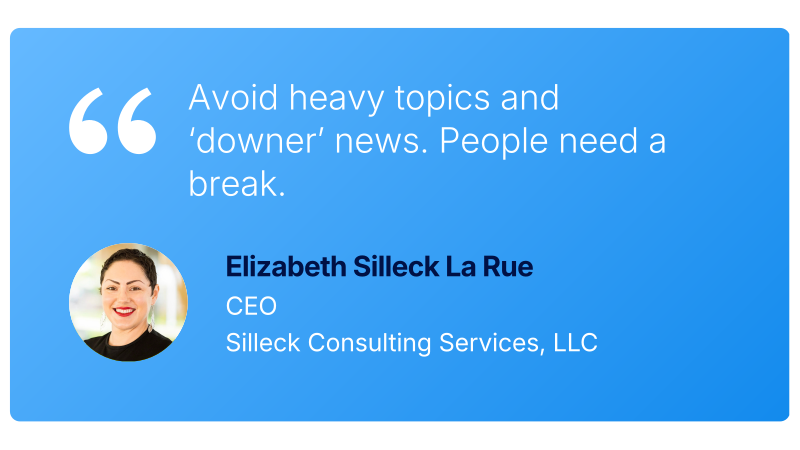 Of course, the need behind your mission is still real, but summer calls for a bit more care in how you frame it – especially if you’re fundraising for a delicate cause. When donors are prioritizing rest and relaxation, they may shy away from heavy messaging.
The same goes for urgency. Maria recommends being careful about urgent appeals when there isn’t a true urgent need.
Darrin has a similar take:
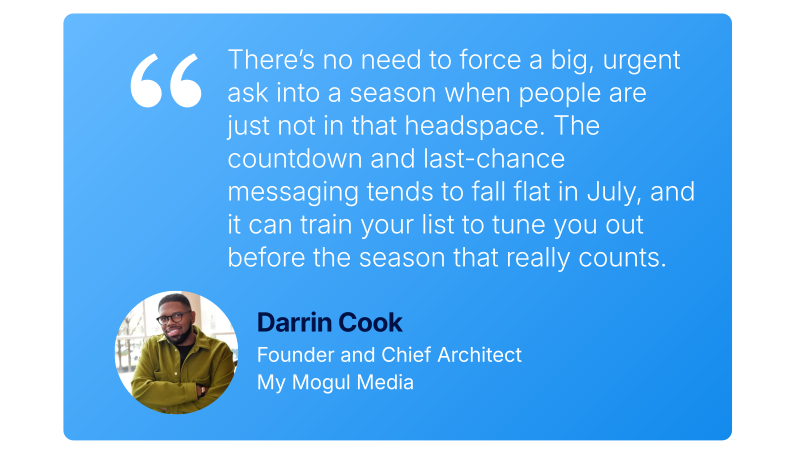
Instead of using summer to manufacture pressure, use it to stay connected, build trust, and bring donors closer. If messaging does feel heavy, it probably needs to be softened.
Some slow-season work isn’t glamorous. But it can make your future campaigns easier. For Kelly, the first place to start is obvious:
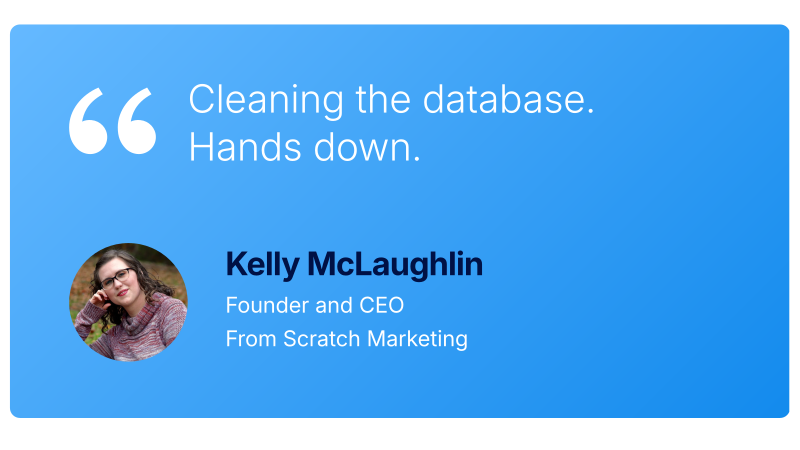 Messy data affects everything. Segmentation, follow-ups, reporting, personalization – and ultimately, how confidently your team can move when things pick up again.
Darrin recommends looking at the bigger donor journey, too, especially the “path a donor walks from their first gift to their second.” He went on to share a valuable example:
We had an organization use the summer to rebuild their donor welcome emails and clean up their data instead of running one more appeal. By the time year-end hit, every new donor was getting a real thank you automatically and the team was not buried in catch-up work. Their fall campaign did better with a lot less friction, because the system was carrying the load.”
Katherine also uses the summer months for this kind of structural work, from updating welcome series to sending fun donor postcards, optimizing donation pages, and – of course – cleaning up the database.
These are fixes your donors may not always see directly, but they definitely feel. When the pressure mounts again, your team will feel the difference, too.
Several experts brought up year-end planning, and for good reason: Giving Season gets manic, fast.
Kelly uses the slower months to work on her year-end campaign plan and even start drafting materials. Her reasoning:
 Darrin adds that year-end planning “does not get won in December” – the strongest campaigns are often shaped in the quiet months before everything becomes urgent.
But, of course, there’s a balance here. Maria pushes back on the idea that nonprofits should use this season to produce as much content as possible.
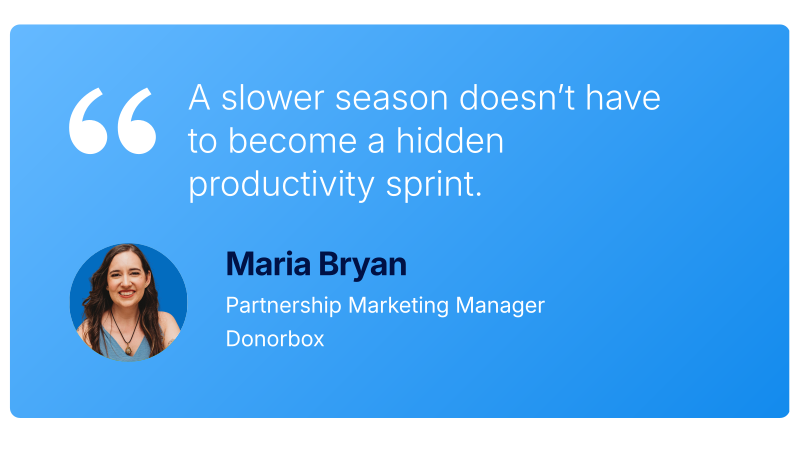 So find the sweet spot. Prepare enough to cut down the scramble later, but don’t make the mistake of turning summer into a second busy season.
Start with the pieces that will make the biggest difference when things pick up, like:
To be extra clear: the goal here is absolutely not to do year-end early. It’s to make year-end feel even a bit less chaotic.
Across the board, the same message kept coming through: use this quieter time with care. Keep donors close. Ease up on forced urgency. Fix the parts of your journey that feel clunky. Do enough year-end prep to reduce the scramble later.
And don’t forget the people doing the work!
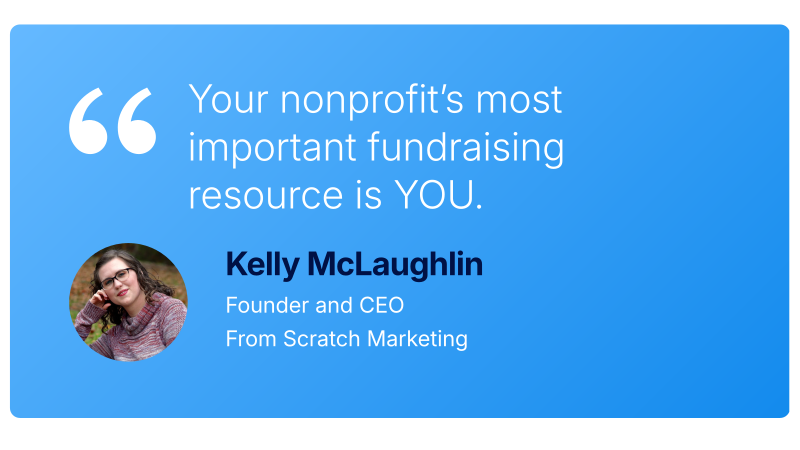 Maria even suggests making rest part of the strategy. That’s an important message if you, like most fundraisers, are an expert at turning every quiet moment into another task.
The slow season can be a time to build. But also a time to breathe, reset, and return to work with more energy.
If part of your reset includes improving your donation experience, donor data, recurring giving, or follow-up process, Donorbox has all the tools you need to build a stronger fundraising foundation before the busy season begins.


Fern is a journalist-turned-editor with 8 years of writing experience, now using that skill set to help nonprofits share their stories and connect with donors. Along with her editorial work, Fern volunteers with animal welfare organizations and has spent years fostering and rehabilitating rescue parrots.
 Join the fundraising movement! Join the fundraising movement!