


100K
Annual visitors

100K
Annual visitors
3x
More donations in the lobby
$3,750
Raised from 2 events
2
Live Kiosks set up
In Seattle, Washington, where rapid development and private waterfront properties make public water access rare, the Center for Wooden Boats (CWB) stands out as a vibrant community haven. The CWB on South Lake Union Park is a hands-on "living" maritime museum, sailing school, and education center dedicated to keeping maritime craftsmanship alive through interactive experiences.
Its story began almost 70 years ago, with a collection of traditional wooden crafts owned by founders Dick and Colleen Wagner. Their growing collection naturally blossomed into a small boat rental operation, and soon, both Dick and Colleen were also teaching community members how to row and sail. In 1979, that passion officially became the nonprofit organization that serves as a cornerstone of Pacific Northwest maritime culture today.
“We believe that the art, craft, and heritage should not be observed; it should be witnessed," says Corey McDaniel, the Center’s Director of Development & Fundraising. CWB’s massive, volunteer-powered campus maintains a fleet of over 200 small wooden vessels, and every year, roughly 100,000 visitors pass through its doors. These groups range from 5-year-old sailing students to 85-year-old restoration volunteers.
Through free community programs, such as monthly Public Sails that get as many as 1,200 people onto the water in a single day for free, CWB ensures that everyone in the community can experience the beauty and tranquility of Seattle’s open waters.
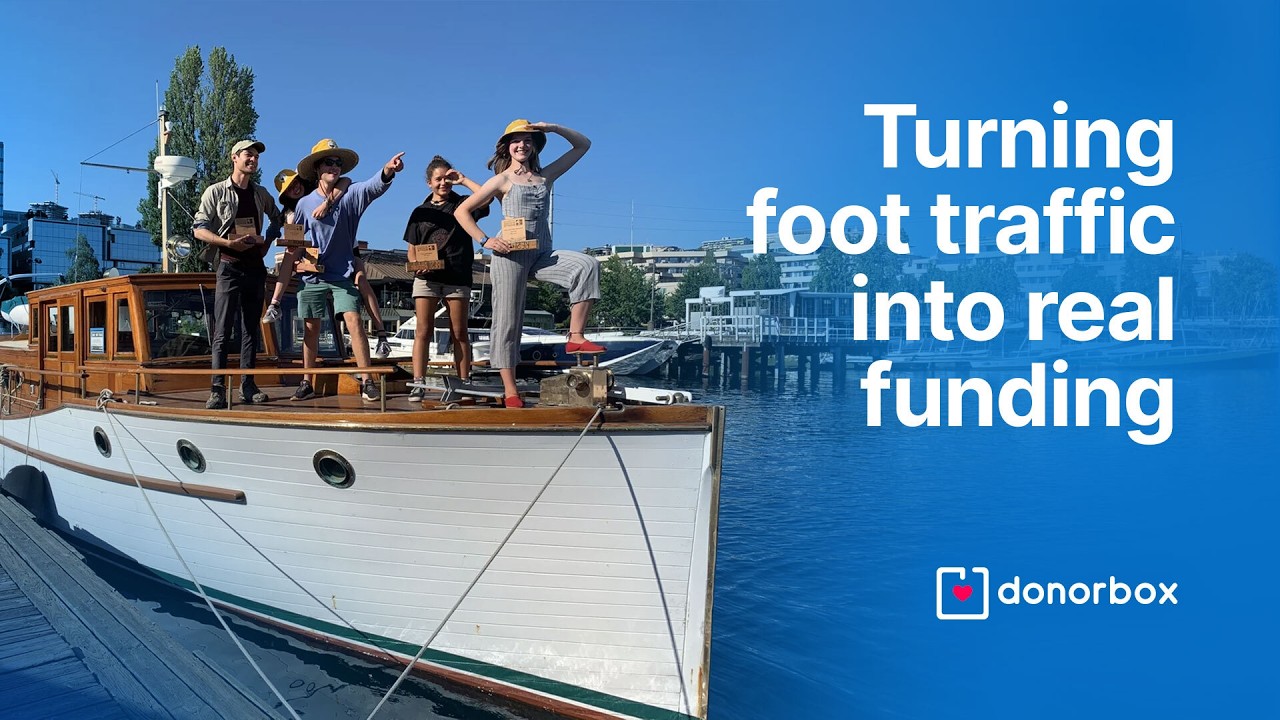
When Corey stepped into the role as CWB’s first director-level development leader, he immediately saw an opportunity. Despite welcoming tens of thousands of passionate visitors, tourists, and sailors, CWB lacked a structured culture of receiving donations on-site.
In-person giving relied on a traditional cash box at the front desk lobby, limiting visitors to cash-only donations. When inspired visitors asked how to donate, volunteers would suggest visiting the website and giving online later. “If [visitors] aren’t immediately given the opportunity to give when they ask, you've lost them. They're not going to give,” says Corey.
As a result, the lobby’s cash box was yielding a modest $5 to $10 per week in total. To capture the generosity of today’s increasingly digital-savvy visitors, CWB needed a seamless solution that eliminated friction and allowed instant, effortless contributions.
Determined to remove obstacles to giving, Corey sought a fast, visually appealing platform that wouldn't slow donors down with endless form fields. Donorbox Live™ Kiosk proved to be the ideal fit as he scoped out options.
"If I go to a kiosk to make a quick $5 or $10 donation, and I’m bogged down by screen after screen asking for all my information, I’m probably going to walk away. One of my favorite things about Donorbox is that donors can just tap and go—or optionally enter their info for our newsletter or physical mailings. That was one of the most important things to us,” Corey explains.
CWB implemented two key giving stations: one in the Wagner Education Center lobby, placed on a custom-built wooden pedestal to capture gifts from tourists and museumgoers, and one positioned on a standing podium on the docks, where rowers and boat renters pass by after finishing their sessions on the water.
Additionally, CWB adopted Donorbox Events to streamline ticket sales and donor engagement for community gatherings, such as their popular Beers in the Boathouse event.
Since setting up their two Live Kiosks, CWB has seen an immediate transformation in visitor giving dynamics. Within the first month of launching the museum lobby Live Kiosk on a wooden podium, lobby donations tripled. The organization is raising hundreds of extra dollars each month.
For CWB’s Beers in the Boathouse event, ticket sales surpassed expectations, drawing 81 attendees (compared to past averages of 35 to 50). During checkout, registrants voluntarily donated $250 on top of their ticket cost, a unique feature of Donorbox Events.
As Corey focuses on building a new culture of receiving, frontline staff and volunteers are now empowered to act as bridges between inspired visitors and the giving kiosks.

As CWB celebrates its 50th Anniversary, the organization is looking ahead toward an ambitious future.
To prepare for the next half-century, CWB is preparing a $15 million capital project to replace its entire dock system, dredge the lakebed to clean environmental toxins, and restore native vegetation.
Over the coming years, CWB plans to expand its use of Live Kiosks with custom wooden signage, steward recurring donors, and continue to review existing tools and processes to optimize fundraising efforts.
Donorbox is honored to play a small part in CWB’s journey as they inspire community support, preserve historic maritime skills, and keep Seattle’s waters open to all.

Donorbox solves the biggest problem. It makes in-person giving available and present with very clean messaging right off the bat.
Donorbox Live™ Kiosk
Donorbox Events
Optional Form Fields
Set up a Donorbox Live™ Kiosk in lobbies, entryways, or exhibition halls to collect fast, cashless tap-to-donate gifts.
Make donor contact fields optional so supporters can tap and go in seconds without form fatigue.
Use Donorbox Events to sell tickets easily while giving attendees an organic option to add a donation during checkout.
Unbox the world's most donor-friendly donation platform
